Sweet Jeffrey
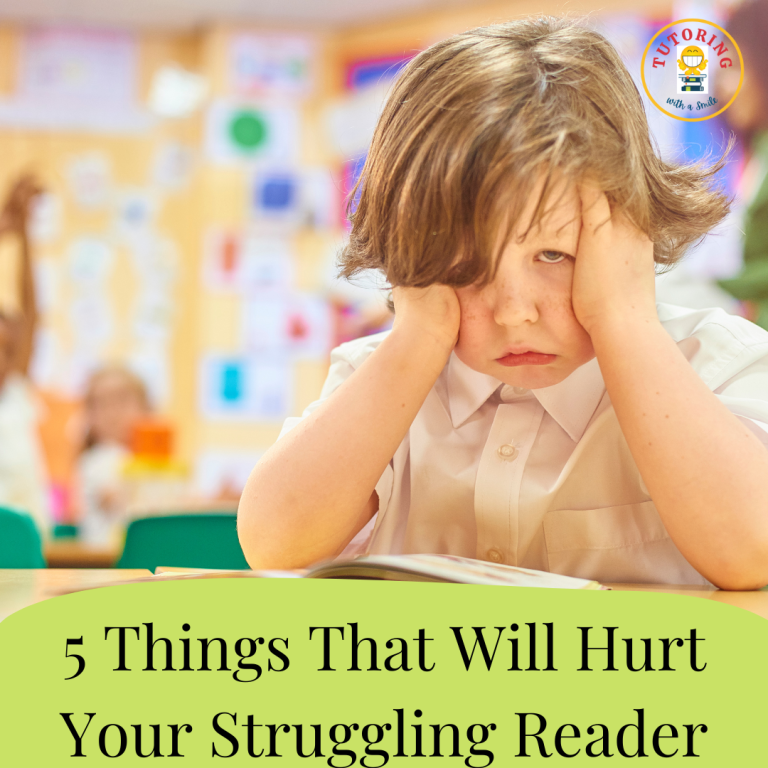
I remember so vividly one of the sweetest students to ever attend my classes, and the moment I brought out a book to read with him. I’ll call him Jeffrey. Jeffrey was a tall, willowy kindergartner. His smile was a little on the shy side, but it lit up his face.
The Literacy Success Program
Jeffrey and another student came to my Literacy Success classroom for thirty minutes three afternoons a week. They needed more time and support than the other kids in their class to develop the skills that soon-to-be readers should have. I read them stories, and we sang rhyming songs and played games to help them learn letter names and letter sounds.
Kiddos like Jeffrey do well with routine. Our routine had three parts.
- First, I read a book to them.
- Next, we talked about the book together. This allowed me to see what they comprehend of the book.
- Finally, we had an activity.
This Early Literacy Routine was part of a successful remedial program for schools in our county. The Literacy Success Program was called LSP, for short. Students who didn’t qualify for Title 1 received intervention services through LSP. It serves as a great pathway for early reading intervention to help students.
Jeffrey Is Ready To Read
Jeffrey loved hearing the stories, he loved talking about the stories and he was anxious to participate in whatever follow-up activity was planned. His letter sounds and sight words were improving, and in time, Jeffrey was ready to read a book I had carefully chosen for him.
Ta-dah!
He was living proof that this proven process worked to help children move through the reading stages to learn to read on their own with assistance from early reading intervention.
Jeffrey Gets a Book
“Jeffrey, I have a book we can read together,” I said as I handed it to him. I smiled, but he didn’t.
His reaction was not something I’d ever have expected. Even now, I wonder why his response was so extreme.
Rather than taking the book from my hand, Jeffrey physically backed up, never taking his eyes off the book. He got as far away as he could until he backed into the door.
He was upset and afraid, and he obviously wanted no part of that book. Seeing the emotion in his eyes, I stopped asking him questions, stopped trying to comfort him, and stopped trying to convince him everything would be okay.
That poor sweet kiddo stayed by the door with his hand on the handle and said very quietly that he wanted to go back to his class.
Of course, we didn’t have to read the book, and of course, we walked back to his classroom.
Who Knows What Happened?
Back in class, he didn’t run to the arms of his teacher or hide in the corner with his head down. He joined his group and continued the day. He was a little low-key, but then again, Jeffrey was that kind of kid.
In the meantime, I relayed what happened to his teacher, who didn’t understand his reaction any more than I did. Jeffrey didn’t want to talk about it to her or to the guidance counselor later on. He just shrugged his shoulders and looked down.
We knew Jeffrey’s home life was unstable, a rough situation for a little boy, but we never really got any insight into his reaction.
Sweet Jeffery Returns To LSP
Jeffery happily returned to my classroom with his classmate for the next session as if nothing had ever happened. His partner read with me while Jeffrey spent his time a distance away at another activity. She enjoyed herself and was delighted to re-read familiar books and then try reading a new book on her own with my support.
Jeffrey read books with me, too, but we stayed at the shared reading stage much longer. I held the books, and I did most of the reading. With patience and encouragement, he joined in on parts he felt comfortable reading, which were some sight words and repeated phrases. Each child learns at a different rate, so Jeffery taking a bit longer was no trouble at all and nothing to alarm you.
And then one day, Jeffrey picked up a book himself.
What more could I ask for? Those are the moments where we teachers find our joy and know we made a difference in a student’s life.
Jeffery Plays “Catch Up”
I met Jeffrey, “where he was,” at his current skill level. He received appropriate interventions suited to his current skill level, and we continued to work on his foundational reading skills until they were solid and automatic.
Unfortunately, as often happens, Jeffrey made progress, but he couldn’t catch up and read at grade level. He continued to read at least two grade levels behind his peers.
Jeffrey was retained in first grade and evaluated by the school psychologist in second grade. Her evaluation revealed learning disabilities that qualified him as a special needs student.
The school’s child study team prepared his IEP, Individual Education Plan, outlining Jeffrey’s academic goals. The IEP stated the details of his instruction and additional services to which he was entitled. These services would help to serve Jeffery and give him the best possible opportunities to learn despite his disabilities.
Would Early Reading Intervention Have Helped?
I can only wonder what Jeffrey could have accomplished if his learning disabilities had been identified earlier and additional services were available sooner for him. What would have changed if he had been given early reading intervention?
Would Jeffrey have reached grade level expectations along with his peers? Maybe not, but we’ll never know, will we?
How Early is Early Intervention?
Children struggle for a thousand different reasons.
The struggle can be ignored, but don’t expect it to disappear.
Schools tend to advise parents to wait before providing additional services. That works for the school, but it’s not necessarily in the best interests of the children,
Certainly don’t wait until the dreaded state testing in 3rd grade when schools scramble and show interest in the students who will bring down school scores.
If your child struggles, the earlier intervention begins, the better; even in kindergarten when learning the alphabet song and recognizing letters isn’t all that easy.
Would Tutoring Help?
Yes. You can reduce your child’s struggles with extra help now.
The right reading tutor can address your concerns and help your child with fundamental skills.
Tutoring provides valuable instruction now.
Note: Sadly, Pinellas County discontinued allocating funds for the Literacy Success Program some 10 years later. What a shame the kids lost such a valuable program, and the teachers specifically trained to help them become successful readers.